Mattress materials and consumer guidance
Organic Crib Beds: Firmness, Fit, and Material Checks
A crib mattress is a small landscape with a serious job: it must provide a firm, flat surface that fits the crib correctly. Organic fibers and materials may be part of a family’s priorities, but the first checks are straightforward—safe sleep guidance, exact dimensions, firmness, and clear product information.
Published November 10, 2026
Choosing a mattress for a baby can bring a surprising number of questions into a room that is otherwise prepared for quiet: What does “organic” actually mean? Is a softer surface more comfortable? Will a mattress labeled standard size fit a particular crib? And how can a parent compare materials without losing sight of the most important requirement?
Begin with the sleep surface, not the marketing language. For infant sleep, recognized safe-sleep guidance emphasizes placing a baby on their back on a firm, flat, non-inclined surface made for infant sleep, with a fitted sheet and no loose bedding or soft objects. A mattress’s organic status does not replace these requirements. Nor do extra comfort layers make a crib mattress safer or more suitable.
From there, evaluate fit and firmness, then read the construction and care details. These checks make it easier to compare organic crib mattresses—including options from brands such as Naturepedic—on information that can be verified rather than on broad promises. The goal is not to find the most elaborate mattress. It is to understand what the product is, how it is intended to be used, and whether it fits the crib and the family’s priorities.
Why the order of checks matters
Organic materials can be an important consideration for families, but they are only one part of a crib mattress decision. A product can feature cotton, wool, or other materials and still be the wrong size for a particular crib. A certification can describe a material or process without establishing that a mattress is appropriate for an infant’s sleep space. And a soft topper can alter the surface even when the mattress beneath it is firm.
Think of the selection process as a series of gates. First, confirm the mattress is designed and labeled for crib use and meets applicable safety requirements. Next, make sure it fits the exact crib. Then consider firmness, construction, materials, certification, and cleaning instructions. This order keeps desirable features from distracting from basic suitability.
For safety questions specific to a baby, consult current guidance from pediatric and public-health authorities and the instructions supplied with the crib and mattress. Product information can help explain a particular model, but it cannot replace professional advice or current safety standards.
Firmness: understand the purpose of the surface
A crib mattress should provide a firm, flat surface for infant sleep. “Firm” does not mean rough or uncomfortable to an adult’s hand; it means the surface should not give way excessively under the baby. Adult impressions of plushness are not a reliable test of whether a mattress is suitable for an infant.
Labels such as “extra firm,” “supportive,” or “comforting” can be difficult to compare across brands because manufacturers may use different descriptions. Look for the product’s intended-use statement and relevant compliance information, then follow the manufacturer’s instructions. If the product’s firmness or infant suitability is unclear, contact the manufacturer before buying rather than attempting to judge it from a photograph or brief sales description.
A mattress pad, pillow, quilted topper, or improvised cushion may change the surface and should not be added to an infant sleep space unless the relevant safe-sleep guidance and product instructions specifically allow it. In general, keep the crib uncluttered: use a correctly fitted sheet, and leave out pillows, blankets, positioners, soft toys, and other loose or soft items. A waterproof feature built into a mattress is different from adding a separate layer; assess any accessory on its own instructions and safety information.
Firmness should also be considered alongside the mattress’s intended age and use. Some products are designed with two sides for different stages, while others are not. Do not assume that a reversible mattress has a particular infant or toddler side without checking the maker’s directions. Use only the side specified for the child’s age and the product’s intended setup.
Fit: measure the crib, not just the label
“Standard crib mattress” is a useful starting description, not a substitute for checking dimensions. Cribs can vary, and the mattress must fit the specific sleep space without dangerous gaps. Check the crib’s manual for its mattress requirements, then compare those requirements with the mattress’s listed length, width, and thickness. When a manufacturer provides more precise measurements or compatibility information, use it.
For a practical fit check, place the mattress in the assembled crib exactly as the instructions describe. Examine all four sides and corners. The mattress should lie flat and fit snugly; it should not bow, buckle, or leave a sizeable space between its edge and the crib frame. Do not rely on a seller’s size name alone, and do not trim, compress, or otherwise modify a mattress to force a fit.
Thickness matters as well. It affects how far the mattress sits below the top of the crib rails and how the crib’s adjustable mattress support can be used. Follow the crib manufacturer’s specifications for mattress thickness and support height. As a baby grows and begins to sit, kneel, or stand, the mattress-support position becomes particularly important; use the crib manual to make any adjustment.
When comparing online listings, look for dimensions in inches and check whether measurements describe the mattress itself or the packaging. Confirm the model number, size option, and any stated compatibility limits. If the crib is an unusual shape, older model, portable crib, or play yard, do not assume a standard mattress will fit. Use only a sleep surface approved for that product.
- Read the crib manual for the permitted mattress size and thickness.
- Compare the mattress’s actual listed dimensions with the crib’s requirements.
- Check that the mattress lies flat and fits snugly after installation.
- Recheck fit if the mattress or crib changes, or if the product instructions call for it.
- Use the crib’s mattress-support settings as directed, adjusting them as the child develops.
What “organic” can—and cannot—tell you
The word “organic” is most useful when a product listing explains exactly which material is certified and by whom. A mattress may contain several layers: a cover, a filling, a core, adhesives, barriers, or other components. A claim about organic cotton, for example, does not automatically mean that every part of the finished mattress is organic.
Look for the certification name, the scope of the claim, and the materials it covers. Depending on the certification and the product, a standard may apply to fiber production, processing, chemical inputs, or supply-chain documentation. Certifications are not interchangeable, and a logo without an explanation can leave important questions unanswered. If a listing says “organic mattress,” look for a detailed materials breakdown rather than assuming the label describes every component.
It is also helpful to distinguish a material claim from a health or safety claim. “Natural,” “plant-based,” and “chemical-free” are broad phrases that need context. All physical materials are made of chemicals in the scientific sense, and no label alone establishes that a product prevents allergies, improves sleep, or provides a particular health outcome. Seek specific, verifiable details and avoid treating environmental or material language as medical evidence.
Families comparing organic crib mattresses may encounter cotton, wool, latex, and other fibers or materials. Each has distinct characteristics, but the material name by itself does not establish how the complete mattress performs. Ask how layers are assembled, what forms the core, whether the cover is removable, and whether the maker permits washing or spot cleaning. Most importantly, verify that the finished product is intended for infant sleep and maintains the required firm, flat surface.
Reading construction details without getting lost in them
A clear product description should help you picture what is inside the mattress. Look for the core material, the cover fabric, any cushioning or barrier layers, and the way the layers are joined. If a manufacturer gives only broad terms such as “premium natural materials,” ask for specifics. Knowing the components can help you compare products, understand care needs, and identify what a certification actually covers.
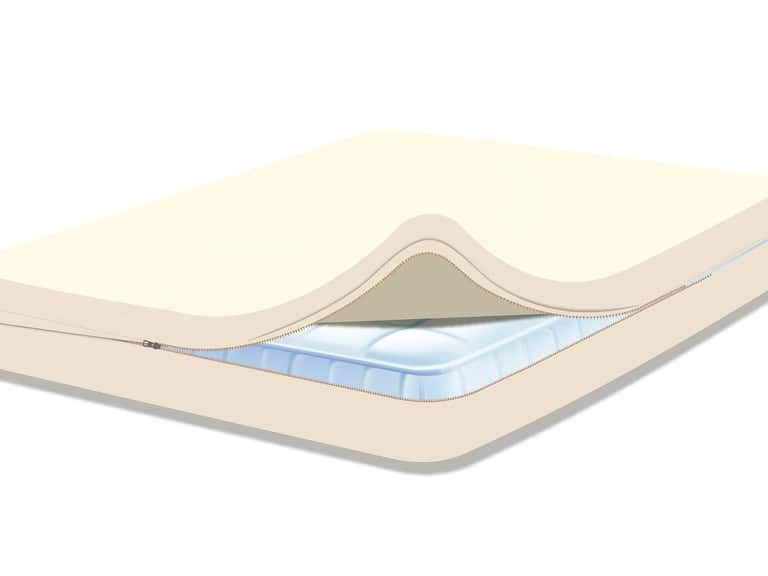
Construction can affect weight, handling, and cleaning, but those qualities should not be confused with infant-sleep suitability. A mattress that is easy to carry is not automatically a better fit. A removable cover may simplify some kinds of care, but it must be used exactly as directed and should not be replaced with an unapproved layer. Similarly, a waterproof surface may help protect the mattress, but the full product still needs to meet the crib’s fit and use requirements.
Consider also how the manufacturer describes testing and compliance. Look for model-specific information, not only general statements about a brand. Product documentation should identify the intended use, the relevant standards or certifications, and any limitations. If a claim is vague, contradictory, or difficult to verify, pause and request clarification.
How to evaluate Naturepedic and other brands
Naturepedic is one brand families may encounter when researching organic crib mattresses. The same comparison process applies to Naturepedic and to any other manufacturer: review the exact model, not just the brand name. Products within a single brand can differ in size, construction, materials, certifications, and care instructions.
Start with the model’s full name and current specification sheet. Confirm that it is a crib mattress intended for the particular sleep space, then check dimensions and thickness against the crib manual. Review the firmness and intended-use guidance. After those essentials, examine the materials list and certification details, making note of which layers are included in each claim.
Finally, read the care and warranty information before deciding. Is the surface meant to be wiped, spot cleaned, or treated another way? Can any cover be removed, and if so, how must it be reinstalled? Are there restrictions on cleaners, heat, or moisture? These practical details matter because incorrect cleaning or assembly can damage a product or change how it is used. When information is missing, contact the manufacturer or retailer and request a model-specific answer.
A useful comparison is not a contest to count the most certifications or the longest list of materials. It is a way to see whether the product meets the family’s priorities while satisfying the crib’s requirements and providing an appropriate infant sleep surface.
Care, cleaning, and keeping the surface as designed
Care instructions are part of the mattress’s construction story. A label may specify spot cleaning, wiping, or another limited method; a removable cover may have separate instructions. Follow the product’s directions rather than using a household cleaner, soaking the mattress, or putting a component in a washer or dryer without approval. Excess moisture or heat can damage materials and may affect fit or construction.
Use only bedding that is designed to fit the mattress securely. A sheet that pulls loose or bunches up is not a substitute for a correctly sized one. Avoid adding layers to compensate for a surface that seems uncomfortable or to make a mattress fit a crib. If the mattress becomes damaged, misshapen, or no longer fits as intended, stop using it and consult the manufacturer and crib instructions about replacement.
Keep the product paperwork, model number, and care label information accessible. These details can be valuable if you need to check a recall, ask about cleaning, or confirm compatibility. Before buying secondhand, establish the mattress’s age, history, condition, and exact model, and check current safety guidance and recall information. If its history or condition is uncertain, choose a different sleep surface.
A practical comparison checklist
Online descriptions can make every option sound reassuring. A concise checklist helps turn a crowded product page into a set of questions with useful answers:
- Intended use: Is this exact product described as a crib mattress for infant sleep?
- Fit: Do its listed length, width, and thickness match the crib manufacturer’s requirements?
- Firmness: Does the maker provide clear infant-use guidance and describe a firm, flat surface?
- Materials: Are the cover, core, filling, and other layers identified?
- Certifications: Are certification names and the materials or processes they cover explained?
- Care: Are cleaning and maintenance instructions clear and practical for your household?
- Documentation: Can you find the model number, safety information, warranty terms, and manufacturer contact details?
- Accessories: Does the listing recommend any extra layers? Check current safe-sleep guidance and product instructions before adding anything to the crib.
If a key answer is missing, do not fill the gap with an assumption. Ask the manufacturer or retailer for written clarification, especially about fit, intended use, and materials.
Questions families often ask
Does an organic crib mattress need a separate topper?
No topper is needed simply because a mattress is organic. For infant sleep, prioritize a firm, flat surface and follow safe-sleep guidance. Do not add cushioning or bedding unless it is specifically permitted by current guidance and the product instructions.
Does “standard size” guarantee a snug fit?
No. Use the exact dimensions and compatibility instructions for both the mattress and crib. Once assembled, check that the mattress lies flat and fits snugly, without substantial gaps at the edges or corners.
Does an organic certification mean the whole mattress is organic?
Not necessarily. Certifications can apply to particular materials, components, or production processes. Read the certification’s scope and the model’s full materials list to understand what is covered.
Can I use an adult mattress firmness test?
Do not rely on an informal hand-press test or an adult’s comfort impression to determine whether a crib mattress is suitable. Use model-specific product information, relevant safety documentation, and the crib manufacturer’s instructions.
What if the mattress feels soft or does not lie flat?
Do not try to correct the problem with a board, topper, or extra padding. Stop using the product until you have checked the instructions and contacted the manufacturer. If the mattress is damaged, deformed, or incompatible with the crib, it may need to be replaced.
The clearest choice is the one you can verify
Organic crib mattress shopping begins in a small space but touches many questions: material sourcing, certification, cleaning, crib design, and safe sleep. Keep the priorities in order. Confirm the product is intended for infant use. Match its dimensions to the crib. Look for a firm, flat surface. Then assess the materials and certifications with enough detail to understand what each claim means.
Whether you are considering Naturepedic or another maker, the best comparison is grounded in the exact model’s documentation. Clear dimensions, transparent material descriptions, specific care directions, and accessible safety information are more useful than vague assurances. A well-informed choice does not depend on a long list of extras; it depends on a sleep surface that fits correctly and is used as intended.
Once the mattress is in place, keep the crib simple and follow current safe-sleep guidance. The landscape of a baby’s sleep should be calm, flat, and uncluttered—its essentials defined not by embellishment, but by fit, firmness, and careful attention to detail.