Mattress Materials
Latex Layers Explained: Responsiveness, Firmness, and Care
Latex has a distinct, buoyant feel: it compresses under pressure, then pushes back as the body moves. But “latex” is not a single sleep experience. Firmness, layer thickness, material composition, and the construction around it all shape how a mattress feels and performs. Understanding those details makes it easier to compare options—and to care for a latex sleep surface without compromising its useful life.
Published October 11, 2026
What makes latex feel different?
Press a hand into a latex layer and it yields, then rises quickly when the pressure lifts. That spring-back is the quality often described as responsiveness. It can make turning over feel easier than it does on some slower-recovering foams, which tend to hold an impression briefly before returning to shape.
Responsiveness is not the same as firmness. A soft latex layer may compress readily while still feeling lively, whereas a firmer one may resist more strongly and rebound with similar speed. Nor does buoyancy automatically mean that a mattress is supportive for every sleeper. The sensation at the surface is only part of the story: underlying layers, body shape, sleeping position, and the way weight is distributed all contribute to the overall result.
Latex is used in comfort layers, support layers, and removable toppers. In each position it has a different job. A thinner upper layer may soften the first contact with the mattress; a thicker or firmer layer deeper in the build may help limit how far the body settles. The full construction—not one material label—determines the feel.
Natural, blended, and synthetic latex
Latex foam is made through processes that transform a liquid latex compound into an elastic foam. The raw material may come from natural rubber, be synthetically produced, or combine natural and synthetic components. Product descriptions do not always use terminology consistently, so reading the material specification is more useful than relying on a broad phrase such as “latex feel.”
Natural latex is derived from rubber-tree sap. Synthetic latex is made from petrochemical feedstocks, while blended latex uses a mixture of natural and synthetic materials. These categories describe composition, not a guaranteed level of comfort, durability, or environmental impact. Formulation, manufacturing, density, layer design, and quality control matter too.
Certifications can help clarify particular claims, but they should be interpreted within their stated scope. A certification may address the material’s content, emissions, or production criteria; it does not by itself prove that a mattress will feel comfortable or last a specific number of years. When comparing products, check which component is certified, what the standard covers, and whether the claim applies to the entire mattress or only an individual layer.
For people with a known latex allergy, material information deserves particular attention. Sensitivity varies, and exposure risks depend on the person and the product. Anyone with a diagnosed allergy should seek guidance from a qualified clinician and confirm a product’s construction with its manufacturer rather than assuming that a cover fully eliminates exposure.
How latex firmness is described
Mattress firmness labels—such as soft, medium, or firm—are useful shorthand, not a universal measurement. One maker’s medium may feel different from another’s because ratings are not always based on a shared scale. Even within one mattress, the surface can feel softer than the support core beneath it.
Latex firmness may be described using a proprietary scale or a technical measure such as indentation force deflection (IFD), sometimes called indentation load deflection (ILD). These terms refer to force required to compress a sample by a specified amount under a testing procedure. They can help compare layers made and tested under similar conditions, but they are not a direct translation into a sleeper’s experience. Testing dimensions, sample preparation, and the construction of the finished mattress all influence what the number means.
Density is another specification that readers may encounter. It describes mass per unit volume, but density and firmness are not interchangeable. A denser material is not necessarily firmer, and firmness alone does not tell you how well a layer will hold up. If specifications are unclear, ask the manufacturer what its numbers measure and whether the figures apply to the latex layer itself or the complete mattress.
When comparing firmness, consider the whole sleep system. A mattress protector, pad, or topper can soften or otherwise alter the surface sensation. A rigid or flexible bed base can also affect how a mattress behaves. For a meaningful comparison, keep the foundation and bedding as consistent as possible.
Why layer thickness changes the feel
Thickness influences how much room a latex layer has to compress before the body meets a firmer layer beneath it. A thinner comfort layer may provide a more direct sense of the support core. A thicker layer can allow deeper contouring, though the outcome depends on its firmness and on what lies below.
This is why the same firmness rating can feel different at different depths. A soft layer over a firm core may offer surface cushioning with an underlying sense of resistance. A similar layer over a more yielding base can allow the body to sink farther. Think of the mattress as a landscape of interacting layers rather than a single slab: each material changes the way pressure travels through the structure.
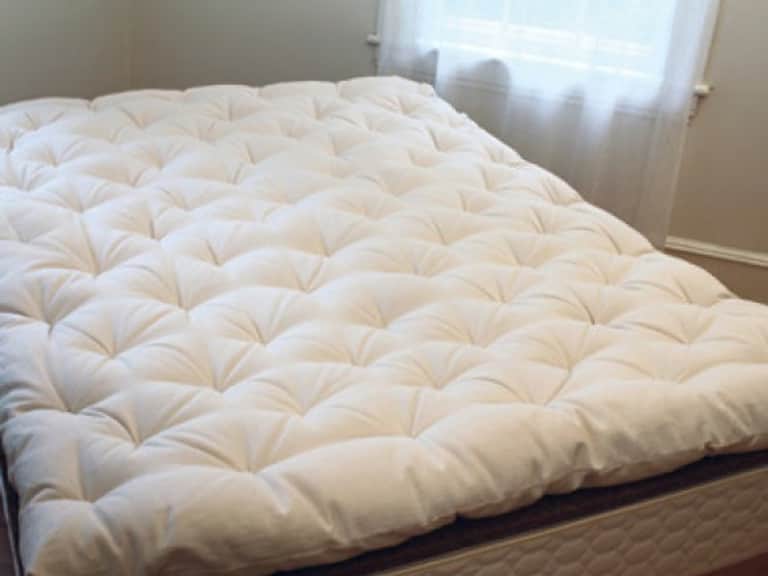
Latex toppers offer a way to adjust an existing sleep surface, but they are not a remedy for every mattress problem. A topper may change comfort when a mattress feels slightly too firm or needs a different surface response. It is unlikely to restore a sagging or structurally worn-out mattress, and it cannot reliably correct inadequate support in the base. Before choosing one, note the mattress condition, the desired change, the topper’s thickness and firmness, and whether its attachment or cover is compatible with the bed.
Fit matters, too. A very thick topper can raise the sleep surface and affect fitted-sheet depth, bed height, or the sense of edge stability. It may also shift if it is not secured properly. Small practical details can determine whether a new layer feels integrated or like a separate slab placed on top.
Responsiveness, pressure relief, and movement
The quick rebound of latex can give sleepers a more buoyant sensation than materials that respond slowly. Some people appreciate how easily they can change position; others prefer a surface that conforms more gradually and holds a closer cradle. Neither response is inherently better. The relevant question is how the mattress feels to the individual over a full night, not during a brief press in a showroom.
Pressure relief depends on how the body’s weight is distributed and how the mattress accommodates its contours. A layer that is too firm for a particular sleeper may not yield enough at pressure points. A layer that is too soft or too thick for that sleeper, in the context of the full mattress, may allow excessive sinking. Sleeping position, body proportions, personal comfort preferences, and the support structure all influence this balance.
In a shared bed, responsiveness can influence the experience of movement. Latex may recover quickly, while other parts of the mattress—such as springs or a foam base—also affect motion transfer. A partner’s movements, the size of the bed, the foundation, and each sleeper’s sensitivity contribute. Claims about motion isolation should therefore be evaluated as properties of the entire mattress rather than of latex alone.
Temperature is similarly multi-factorial. Latex construction may include channels or other design features intended to encourage airflow, but the cover, surrounding layers, room conditions, bedding, and individual heat perception play important roles. A material cannot guarantee a cool night in every setting. Consider the complete construction and the conditions in which the mattress will be used.
Questions to ask when comparing latex layers
Clear specifications make comparison more reliable. Product pages sometimes emphasize a material name while leaving out construction details that strongly affect feel. Before choosing a latex mattress or topper, look for information that explains what is inside, how the layers are arranged, and what the care requirements are.
- What type of latex is used? Check whether it is described as natural, synthetic, or blended, and whether the claim applies to every layer.
- How thick is each layer? A complete layer-by-layer description can reveal where cushioning and resistance are likely to come from.
- How is firmness measured? Ask what the stated rating or number means and whether the method can be compared fairly with other products.
- What is the mattress cover made of? Covers can affect surface feel, airflow, and whether the latex is removable or accessible.
- What foundation is recommended? A suitable base helps the mattress rest evenly and may be required for warranty coverage.
- Can the layers be rotated or rearranged? Some designs allow more adjustment than others; do not assume that a layer is removable unless the manufacturer confirms it.
- What are the cleaning instructions? Care can vary by cover, foam type, and construction, so use product-specific guidance.
- What does the warranty cover? Review exclusions, required support conditions, and how the manufacturer defines a covered defect.
If possible, test a mattress in the position you normally sleep in and allow enough time to notice how the surface responds when you settle and move. A quick showroom impression can be informative, but it cannot replicate every night’s use. For online purchases, read the trial and return terms carefully, including any fees, time limits, and requirements for protecting the mattress.
Basic care for latex sleep surfaces
Latex care begins with the manufacturer’s instructions. Mattress layers differ in construction, and a removable cover may have different cleaning requirements from the latex beneath it. General cleaning advice should never override a product label, warranty condition, or direct guidance from the maker.
Many latex layers should not be saturated or placed in a washing machine. Excess water can be difficult to remove from foam and may affect surrounding materials. If a spill occurs, check the care guide first. Where spot cleaning is permitted, use only the recommended method, avoid harsh chemicals, and allow the affected area to dry completely before covering it again. Do not assume that sunlight, heat, or aggressive scrubbing is safe for the material.
A washable mattress protector can help reduce exposure to spills, body oils, and everyday soil. Choose one that fits the mattress depth and does not significantly change the feel you want to preserve. Follow the protector’s laundering instructions, and ensure it is fully dry before putting it back on the bed.
Ventilation is part of routine maintenance. Keep the mattress on a compatible, adequately supported base and follow instructions about rotating or turning it. Some mattresses are designed to be used on one side only; others may permit rotation. A layer that is zoned, shaped, or otherwise designed for a particular orientation should not be flipped unless the manufacturer says to do so.
Latex can be heavy, especially in a full mattress. Use care when lifting or moving it, and ask for help if needed. Avoid folding or bending a mattress beyond the limits specified by its maker. For removable layers, note their original order and orientation before taking them out so that they can be returned correctly.
When a latex layer changes over time
All sleep materials experience use-related changes, but a change in feel does not have a single cause. Age, weight distribution, the support base, room conditions, and the way the mattress is used may all play a role. A protector that has shifted, a loose foundation, or a changed layer arrangement can also affect comfort and create the impression that the latex itself has changed.
If a mattress feels different, begin with simple checks: confirm that the foundation is level and properly assembled, inspect the cover and protector for bunching, and verify that removable layers are in their intended positions. Review the care and rotation guidance. If there is visible damage, an unusual odor, or a substantial change that persists, contact the manufacturer for product-specific advice.
Do not judge durability from a single night or from a firmness label alone. Construction details, quality control, usage, and care matter. Warranty language can clarify how a maker addresses certain defects, but a warranty is not a promise that every sleeper will maintain the same subjective comfort indefinitely.
A practical way to think about latex
Latex is best understood as a responsive material whose performance depends on its place in the mattress and the details of its construction. Its springy character is a useful starting point, but not a complete description. Firmness, thickness, formulation, cover, and foundation all help determine whether a particular layer feels gently cushioning, distinctly buoyant, or more resistant.
For a grounded comparison, separate the questions. First identify the material and the layer arrangement. Then consider how much cushioning and resistance you prefer, and whether the firmness information is specific enough to interpret. Finally, confirm fit, care, and return or warranty terms. This method replaces broad claims with practical details—and helps match a sleep surface to the person using it.
A latex layer cannot promise perfect sleep, and it is only one part of a bedroom environment. But knowing how responsiveness, firmness, and thickness interact can make the search less confusing. Read the specifications closely, test where possible, and let manufacturer care instructions guide maintenance. The most useful choice is not the one with the most impressive label; it is the one whose construction and feel suit your needs and whose care requirements you can follow.
Quick checklist
- Distinguish responsiveness from firmness: a layer can be soft and springy at the same time.
- Compare natural, synthetic, and blended latex using specific material disclosures rather than assumptions.
- Consider layer thickness and the materials beneath it, not just the surface rating.
- Treat IFD or ILD figures as technical context, not a universal comfort score.
- Check the cover, foundation requirements, and whether layers can be rotated or removed.
- Follow product-specific cleaning guidance and protect the mattress from avoidable spills and soil.